AI Generated Images Copyright Ruling Explained

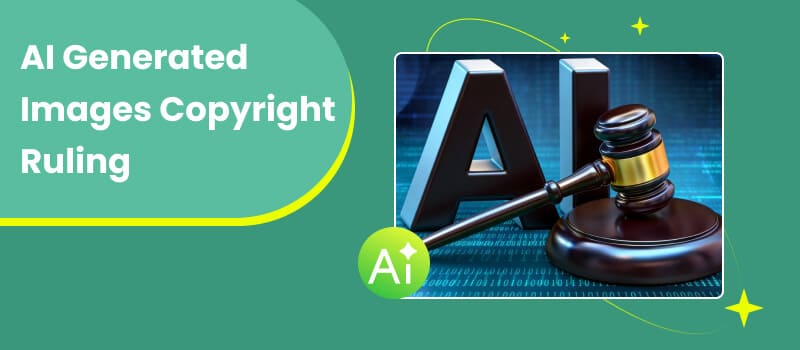
The rapid rise of AI image generation tools has transformed how visual content is created, edited, and distributed. From marketing teams to independent designers, more people are relying on AI to produce high-quality visuals in seconds. However, this technological leap has introduced a complex legal question: who owns AI-generated images? As governments and courts around the world grapple with this issue, copyright law is being tested in ways never seen before. Traditional frameworks were designed to protect human creativity, not machine-generated outputs. As a result, recent rulings and policy statements have started to redefine AI copyright infringement. This article about AI-generated images copyright ruling provides a comprehensive overview of AI-generated images copyright rulings, helping you understand the legal landscape and what it means for creators, businesses, and platforms.
Contents:
- Part 1. What Is AI-Generated Images Copyright
- Part 2. Current Legal Framework for AI‑Generated Works
- Part 3. Key Rulings and Government Positions
- Part 4. Who Owns AI‑Generated Images? — Copyright Ownership Explained
- Part 5. Implications for Creators, Businesses, and Platforms
- Part 6. FAQs about AI Generated Images Copyright Ruling
Part 1. What Is AI-Generated Images Copyright
AI-generated images copyright refers to the legal protection (or lack thereof) granted to images created wholly or partially by artificial intelligence systems.
In traditional copyright law, protection is automatically granted to “original works of authorship” created by humans. This includes paintings, photographs, and digital art. However, AI-generated images challenge this definition because they may not involve direct human authorship.
There are generally three scenarios:
- • Fully AI-generated images – created with minimal or no human input.
- • AI-assisted images – where humans guide the process through prompts or edits.
- • Human-created images with AI tools – where AI acts as a supporting tool.
Copyright eligibility often depends on the level of human creativity involved. The more control and originality a human contributes, the more likely the work is to qualify for protection.
Part 2. Current Legal Framework for AI-Generated Works
The legal framework surrounding AI copyright infringement is still evolving, but several principles have emerged across jurisdictions.
1. Human Authorship Requirement
Most copyright systems require a human author. This principle is central in countries like the United States and members of the European Union.
2. Originality Standard
To qualify for copyright, a work must demonstrate originality. Courts often interpret this as requiring human creativity, not just automated output.
3. Tool vs. Creator Distinction
AI is generally treated as a tool rather than an author. If a human uses AI similarly to software like Photoshop, the output may still qualify for protection.
4. Terms of Service and Licensing
Many AI platforms define ownership and usage rights through their terms of service. This means legal rights may depend not only on law but also on platform agreements.
Because global regulations differ, users must be aware of jurisdiction-specific rules when using AI-generated images commercially that features enhancing face in security camera picture.
Part 3. Key Rulings and Government Positions
How does copyright law relate to AI generated images? Several landmark decisions and policy statements have shaped the current understanding of AI-generated image copyright.
1. U.S. Copyright Office Guidance
The U.S. Copyright Office has clearly stated that works created entirely by AI without human involvement are not eligible for copyright protection.
In multiple decisions, the Office rejected applications for AI-generated works, emphasizing that copyright law protects human creativity only. However, it also clarified that AI-assisted works may be protected if there is sufficient human input.
2. The “Zarya of the Dawn” Case
One of the most discussed cases involved the comic book Zarya of the Dawn. The U.S. Copyright Office granted protection for the text and arrangement but denied protection for AI-generated images within the work. This case highlights a key principle: copyright can apply selectively to human-created elements within AI-assisted projects.
3. Court Rulings on AI Authorship
U.S. courts have reinforced the human authorship requirement. In cases involving AI-generated art, judges have ruled that machines cannot be considered legal authors under current law.
4. International Perspectives
- • The European Union aligns with the human authorship principle.
- • The United Kingdom allows limited protection for computer-generated works but assigns authorship differently.
- • Countries like China have shown more flexibility in recognizing certain AI-generated outputs under specific conditions.
- • Overall, there is no global consensus yet, but the trend strongly favors human-centered copyright frameworks.
Part 4. Who Owns AI-Generated Images? — Copyright Ownership Explained
Ownership of AI-generated images depends on how the image was created and the level of human involvement.
1. Fully AI-Generated Images
If an image is generated entirely by AI with minimal human input, it typically:
- • Does not qualify for copyright protection.
- • May fall into the public domain.
2. AI-Assisted Images
This means anyone could potentially use it without AI-generated images copyright ruling. When a human provides prompts, selects outputs, and refines results, ownership becomes more complex.
If the human contribution is deemed creative enough, they may:
- • Hold copyright over the final image.
- • Control how the image is used and distributed.
3. Platform Ownership and Licensing
Some AI tools grant users ownership of generated images, while others impose restrictions. Always review platform terms carefully.
For example, tools like Picwand enable users to generate and enhance images efficiently, but usage rights depend on the platform’s licensing terms. Understanding these terms is crucial for commercial use.
4. Collaborative and Commercial Contexts
In business settings, ownership may also depend on:
- • Employment agreements.
- • Client contracts.
- • Licensing arrangements.
Clear agreements help avoid disputes over AI-generated content. In doing so, you can take high resolution screenshots without copyright worries.
Part 5. Implications for Creators, Businesses, and Platforms
The evolving legal landscape has significant implications across different groups.
1. For Creators
- • You may not automatically own AI-generated images.
- • Adding creative input increases your chances of copyright protection.
- • Proper documentation of your creative process can be beneficial.
2. For Businesses
- • Using AI-generated images in marketing carries legal risks.
- • Lack of copyright protection may limit exclusivity.
- • Compliance with licensing terms is essential.
3. For AI Platforms
- • Platforms must clarify ownership and usage rights.
- • Transparency in training data and licensing is increasingly important.
- • Legal compliance can affect user trust and adoption.
4. Risk Management Strategies
To minimize risks:
- • Use AI as a creative assistant rather than a sole creator.
- • Review legal policies regularly.
- • Avoid relying on AI-generated images for exclusive branding without modification.
Part 6. FAQs about AI Generated Images Copyright Ruling
Q: Are AI-generated images protected by copyright?
A: Not always. Fully AI-generated images without human input are generally not protected under current laws.
Q: Can I sell AI-generated images?
A: Yes, in many cases you can sell them, but you may not have exclusive copyright ownership unless significant human creativity is involved.
Q: Can AI companies claim ownership of generated images?
A: Some platforms may retain certain rights. Always review the terms before using images commercially.
Conclusion
AI-generated images are reshaping the creative landscape, but copyright law is still catching up. Current AI-generated images copyright ruling emphasize one key principle: human creativity remains at the core of copyright protection. For creators and businesses, this means understanding the limits of AI-generated content and taking proactive steps to ensure compliance. By combining human creativity with AI tools and staying informed about legal developments, you can safely and effectively leverage AI in your workflow. As regulations continue to evolve, those who adapt early will be better positioned to navigate the future of AI-driven creativity.
AI Picwand - Anyone Can be A Magician
Get Started for Free