How to Choose the Right AI Model for Your Needs

Artificial intelligence has rapidly evolved from a niche technology into a mainstream tool used across industries—from content creation and translation to data analysis and image generation. However, with the growing number of AI models available today, choosing the right one can feel overwhelming. Not all AI models are created equal. Some excel at natural language processing, while others specialize in image editing or predictive analytics. Selecting the wrong model can lead to wasted time, poor results, and unnecessary costs. This guide will walk you through everything you need to know about how to choose an AI model effectively. Whether you are a content creator, marketer, developer, or business owner, you’ll learn how to match your goals with the right technology and make informed decisions.
Contents:
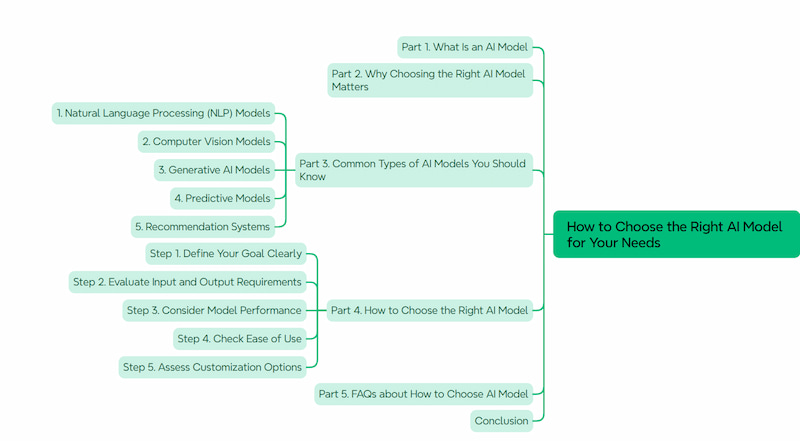
Part 1. What Is an AI Model
An AI model is a trained algorithm designed to perform specific tasks by learning patterns from data. Instead of being explicitly programmed for every scenario, it uses statistical methods and machine learning techniques to generate outputs based on input data.
For example:
- • A text generation model can write articles, summaries, or translations
- • An image model can enhance photos or create visuals from prompts
- • A recommendation model can suggest products based on user behavior
AI models are typically trained on large datasets and can be fine-tuned for specialized applications. The effectiveness of AI model selection depends on several factors, including training data quality, architecture, and optimization methods. In simple terms, an AI model is like a “trained brain” designed to solve a particular problem.
Part 2. Why Choosing the Right AI Model Matters
The right AI model selection is critical because it directly impacts performance, efficiency, and user experience.
1. Accuracy and Output Quality
Different models produce different levels of accuracy. A model trained for general tasks like YouTube video enhancer may not perform well in specialized domains like medical or legal content.
2. Cost Efficiency
Some AI models require high computational resources, which can increase operational costs. Selecting a model that aligns with your budget is essential.
3. Speed and Performance
Real-time applications, such as chatbots or image processing tools, require fast models. A slower model may create delays and reduce productivity.
4. Scalability
As your needs grow, your AI model should be able to handle increased workloads without significant performance drops.
5. User Experience
A well-chosen AI model delivers smoother, more reliable outputs, enhancing overall satisfaction for both individuals and businesses.
In short, the right AI model ensures you get the best results with minimal effort and cost.
Part 3. Common Types of AI Models You Should Know
How to choose the right ai model? While before choosing an AI model, it’s important to understand the major categories available.
1. Natural Language Processing (NLP) Models
These models are designed to understand and generate human language. They are widely used for:
- • Content writing
- • Translation
- • Chatbots
- • Sentiment analysis
If your work involves text, NLP models are essential.
2. Computer Vision Models
Computer vision models analyze and process visual data. Common applications include:
- • Image enhancement
- • Object detection
- • Facial recognition
- • AI-generated images
Tools like AI photo editors or image upscalers fall into this category.
3. Generative AI Models
Generative models create new content based on learned patterns. They can generate:
- • Tex
- • Images
- • Audio
- • Videos
These models are particularly useful for creative tasks and marketing content.
4. Predictive Models
Predictive AI models analyze historical data to forecast future outcomes. They are commonly used in:
- • Finance
- • Marketing analytics
- • Demand forecasting
5. Recommendation Systems
These models personalize user experiences by suggesting relevant content or products. Examples include:
- • Streaming platform recommendations
- • E-commerce suggestions
Understanding these categories helps you narrow down your options based on your specific needs, like AI video skin retouching.
Part 4. How to Choose the Right AI Model
Choosing the right AI model requires a structured approach. Here are the key steps to follow:
Step 1. Define Your Goal Clearly
Start by identifying what you want to achieve. Ask yourself:
- • Do I need content generation, image editing, or data analysis?
- • Is the goal creative, analytical, or operational?
A clear objective helps you filter out irrelevant models.
Step 2. Evaluate Input and Output Requirements
Consider the type of data you will use:
- • Text, images, audio, or structured data
- • Required output format (e.g., article, image, report)
For instance, if your focus is AI-powered image enhancement, you should prioritize tools designed for visual processing rather than text generation.
Step 3. Consider Model Performance
Look at:
- • Accuracy
- • Speed
- • Reliability
Test different models if possible. Many platforms offer free trials or demos that allow you to compare outputs.
Step 4. Check Ease of Use
Not all users are technical experts. Choose a model or tool that offers:
- • User-friendly interfaces
- • Minimal setup requirements
- • Clear documentationeliability
For example, platforms like Picwand provide intuitive tools for AI image editing without requiring coding skills, making them suitable for beginners and professionals alike.
Step 5. Assess Customization Options
Some AI models allow fine-tuning for specific use cases. This is especially important if:
- • You work in a niche industry
- • You need brand-specific outputs
Customization can significantly improve relevance and accuracy.
Step 6. Analyze Cost vs. Value
AI tools vary in pricing. Consider:
- • Subscription fees
- • Usage-based pricing
- • Hidden costs (e.g., API calls)
Choose a model that delivers the best value for your budget.
Step 7. Ensure Scalability
If you plan to expand your usage, make sure the model can handle increased demand without compromising performance.
Step 8. Check Integration Capabilities
A good AI model should integrate easily with your existing tools, such as:
- • Content management systems
- • Marketing platforms
- • Design software
This ensures a smoother workflow.
Step 9. Review Security and Privacy
If you handle sensitive data, prioritize models that offer:
- • Data encryption
- • Compliance with regulations
- • Strong privacy policies
Step 10. Test Before Final Decision
Always test multiple options before committing. Compare outputs based on:
- • Quality
- • Speed
- • Ease of use
This hands-on approach helps you make a confident decision.
Part 5. FAQs about How to Choose AI Model
What is the best AI model for beginners?
For beginners, the best AI model is one that is easy to use and requires minimal technical knowledge. Tools with intuitive interfaces and pre-built features are ideal starting points.
How do I know if an AI model is accurate?
You can evaluate accuracy by testing the model with sample inputs and comparing the outputs to expected results. Reviews and benchmarks can also provide useful insights.
How often should I update my AI model?
AI technology evolves quickly. It’s a good idea to review and update your model periodically to take advantage of new features and improvements.
Conclusion
How to choose AI model? Actually choosing the right AI model is not just a technical decision—it’s a strategic one. By understanding your goals, evaluating different model types, and considering factors like performance, cost, and usability, you can make smarter choices that maximize efficiency and results. As AI continues to advance, staying informed and adaptable will be key. Whether you’re creating content, editing images, or analyzing data, the right AI model can significantly enhance your workflow and productivity. Take the time to explore your options, test different tools, and align your choice with your specific needs. With the right approach, AI can become one of your most powerful assets.
AI Picwand - Anyone Can be A Magician
Get Started for Free