Everything You Need to Know about Recreating Viral Videos

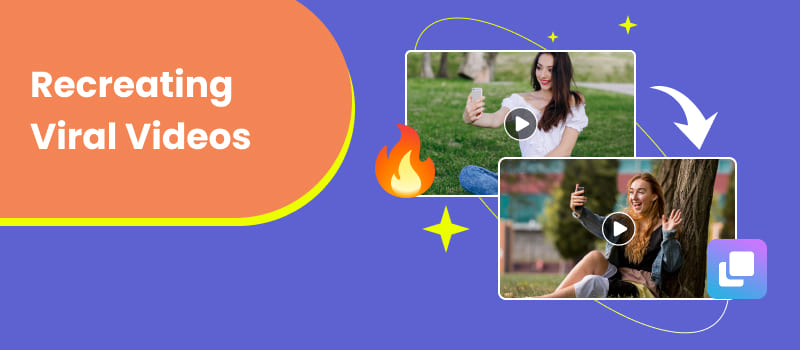
Recreating viral videos is an effective way to make successful content without starting a new project. Instead of copying another creator’s work, you can analyze the elements and use those insights to create original videos. Today, AI has made viral video recreation faster and more accessible. In this post, you will learn why recreating videos works these days. We will also compare traditional editing with AI recreation and show you how to recreate videos using a specialized tool.
Contents:
Part 1: Why Recreate Viral Videos
Learn Viral Formats
When you recreate a viral video, you’re forced to study why it worked. As you may notice, successful videos have recognizable structures, including an attention-grabbing opening and a memorable ending. Studying these patterns helps you identify what keeps audiences engaged. You can also experiment with different styles to learn which elements perform well.
Save Production Time
Creating a viral video from scratch requires filming, editing, and constant revisions. In reality, coming up with a concept, testing the narrative, and guessing how the audience will react takes hours. You can eliminate trial-and-error by following a proven content structure. This lets you focus on creativity rather than starting from scratch for every project.
Proven Formulas
When recreating viral videos, optimization surpasses unguided innovation. Viral videos are market-tested proof of what already sells to audiences. You can take proven techniques and adapt them to your own style. Remember, proven formulas will help you avoid making a video that gets zero engagement.
Algorithmic Advantage
Social media algorithms reward videos that have strong watch time, engagement, and viewer retention. Videos that are properly structured encourage likes, comments, shares, and rewatches. Apply the 3-second hook rule to stop the viewers from scrolling. Originality is crucial, but learning from successful videos increases video recommendations.
Part 2: Traditional Editing vs AI Video Recreation
Manual Editing
Manual editing is the old way of making videos, where you use editing software to change each part of the video. As a creator, you are responsible for every step of the production process. This is the most creative method, but it requires time and technical skills.
Control: In manual editing, you have complete control over every aspect of the video. You can determine where each clip starts and ends, sync audio, and position text exactly where they are supposed to be.
Process: In this method, you can clone a viral video by recording or collecting clips, followed by importing them into editing software. You will then organize the clips, trim sections, arrange scenes, add transitions, and so on.
Manual editing lets you customize every element of your video to match your vision. However, it requires time, technical knowledge, and experience with editing software.
AI Video Recreation
AI video recreation uses artificial intelligence to analyze an existing video and generate a new video inspired by it. Instead of manually editing the scene, you can provide a reference video. Then, the AI will automate the editing and content generation process. For example, you will make a picture dance using your own image.
Control: In AI video recreation, you can copy viral videos by providing prompts or reference materials. The AI will then determine how to generate the scene and add transitions and effects.
Process: The process begins by uploading a reference material or entering a detailed prompt. The AI analyzes elements before generating a new video with a similar format. Still, you can adjust the scene and modify prompts before finalizing the video.
It’s basically the same thing as traditional editing, just automated. The AI creates the video based on the reference materials and prompts. But it sometimes needs to be adjusted by hand to make the video more original and of better quality.
Part 3: Recreate Viral Videos with Picwand
Picwand AI Viral Video Cloner is an online tool that lets you recreate viral videos with AI. It allows you to import 12 reference materials, such as viral videos, images, trending sounds, or a combination of these. It also supports detailed AI prompts for more accurate video generation. It uses AI to break down the elements from the source and generate a new video based on your prompt. You can also adjust the aspect ratio, video resolution, and video duration.
Features
- • Create viral videos up to 15 seconds long for short-form sites.
- • Enter a detailed prompt to help the AI generate the cloned video.
- • Clone trending and viral videos from TikTok’s FYP, YT Shorts, and IG Reels.
- • Replicate viral videos using reference materials, such as video, audio, and image.
Here’s how to recreate a viral video:
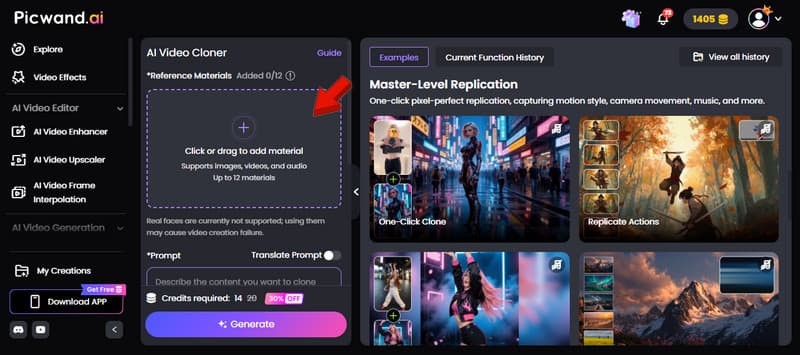
Step 1. Go to Picwand AI Video Cloner and click + to upload your reference materials. You can import up to 12 viral videos, images, trending sounds, or a combination of these.
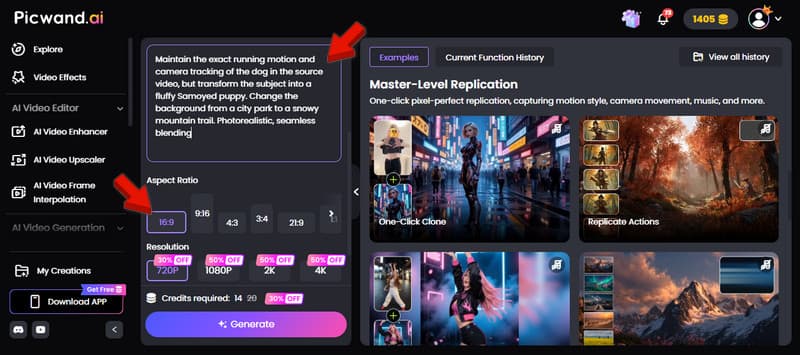
Step 2. Once the references are loaded, describe the video you want to generate in the Prompt field. Next, select an aspect ratio that matches your publishing platform. For TikTok, Shorts, and Reels, choose 9:16.
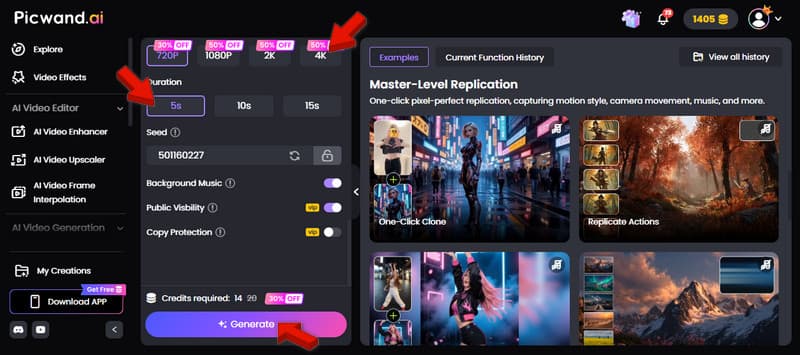
Step 3. Choose a video duration and configure the output resolution. Once all the settings are finalized, click Generate to start recreating the viral video from your source material.
To evaluate the accuracy of Picwand AI Viral Video Cloner, we conduct hands-on testing. In our test, we use several viral videos paired with trending sounds as our reference. The generated video matched the description in our prompts and maintains original content.
FAQs about Recreating Viral Videos
Can AI recreate videos?
Yes, artificial intelligence can clone videos with reference material and prompts. This lets you produce a video that has similarities to the source videos. However, the quality varies depending on your source material and how you write the AI prompt.
Is it legal to create AI videos?
Yes, it is legal to create AI-generated videos. However, their use must comply with copyright law, privacy laws, and platform policies. If you intend to use these videos commercially, then ensure that you have permission to use the source materials.
How to avoid copyright with AI?
Use AI responsibly to avoid copyright issues. Prompts should be original, using personal reference materials, and AI-generated content should be revised. Remember, meaningful human creative input leads to more original content.
Conclusion
Recreating viral videos is about understanding the techniques behind successful content. Most importantly, you should apply them to create something original. Whether you choose traditional editing or AI-powered tools, you must add your own idea instead of copying existing content. For a quicker video recreation, Picwand AI Viral Video Cloner is your best companion tool. It lets you generate viral-style videos from reference materials and prompts.
AI Picwand - Anyone Can be A Magician
Get Started for Free