Basic PlanVIP PlanVIP ExpiredPurchased credits are valid for life but require an active VIP subscription to use
0Credit(s)
You can use credits to access all the AI tools on Picwand, such as the AI Image Upscaler, AI Age Filter, AI Video Enhancer, AI Video Upscaler, AI Video Effects, and more.
Seedream is faster, more structured, and better for consistent, professional outputs. Nano Banana is simpler, more playful, and ideal for quick edits and experimentation. However, for true photo editing control, Picwand AI stands out with basic adjustment tools and smart AI features that go beyond generation into real image refinement.
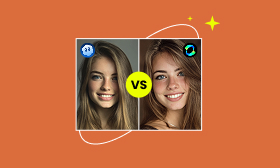
With so many AI generative tools available today, choosing the right one can feel overwhelming. Google's Nano Banana and ByteDance's Seedream 4.5 are currently among the most powerful AI image generation models in the field. But the real question is, which one is better between the two? That's exactly what this post is created for. In this post, we'll break down Nano Banana vs Seedream in all key aspects. We'll introduce both tools and provide an in-depth comparison so you can clearly see how they perform side by side. Our goal is to help you decide which one best fits your workflow and creative needs. And if both still feel limited when it comes to true, precise editing, we'll also introduce a strong alternative that offers more control beyond generation.
Nano Banana is Google's AI image generation and editing model built into Gemini. It allows users to create, remix, and edit visuals through natural language or photo uploads. You can combine multiple images, change styles, swap backgrounds, or transform subjects with minimal effort. Biggest advantage? It can maintain a person's or an object's appearance while making changes.
Part 2: What Is Seedream?
ByteDance developed Seedream 4.0 as a next-generation AI image generator and editor. Its multimodal system transforms text prompts and reference images into high-quality visuals. You can upload multiple reference images, generate batches, and keep characters or styles consistent across outputs. You can also execute precise edits using simple prompts.
Part 3: Nano Banana vs Seedream 4.0: Key Differences at a Glance
Nano Banana
Versus
Seedream 4.0
Realistic image generation
Focus
Artistic image generation
Photorealistic
Image Style
Stylized
Literal and structured understanding
Prompt Handling
Interprets abstract and emotional prompts
Realistic and consistent
Editing with Prompts
Flexible with artistic changes
Maintains details
Character Consistency
May vary slightly for creativity
1
Number of Outputs
Up to 5
Up to 2K
Resolution
Up to 4K
Generates images in minutes
Speed
Generates images in seconds
Part 4: In-Depth Performance Comparison
When you look closely at Seedream 4.5 vs Nano Banana Pro, the differences aren't just technical. They show up clearly in real-world performance, especially depending on what you're trying to create.
Key Features Comparison
Seedream AI and Nano Banana Pro may seem similar at first, but they have different priorities. Seedream 4.5 focuses on high-resolution generation, batch consistency, and editing workflows. It also handles structure-preserving edits well, meaning you can modify images without breaking composition. On the other hand, Nano Banana leans heavily into precision and realism, offering deeper reasoning, better understanding of complex prompts, and more accurate text rendering within images. It also supports multi-image fusion and highly detailed edits, making it feel more like a studio-grade image tool.
Use Case Comparison
The difference between these tools becomes clearer when you look at real-world use cases. Seedream 4.5 works best for high-volume creative production. Its ability to maintain character or product identity across multiple images makes it ideal for branding workflows.
In contrast, Nano Banana is better suited for precision-intensive tasks, such as photorealistic portraits, product photography, infographics, or complex compositions. It's preferred when quality matters more than quantity, especially for final outputs rather than drafts.
Pricing
Seedream:
Starter
Professional
Team
$13.99
$35.99
$69.99
400 Images
1028 Images
2000 Images
Note: This quota expires in 30 days; any unused portion is non-extendable.
Note: This quota expires in 30 days; any unused portion is non-extendable.
Note: This quota expires in 30 days; any unused portion is non-extendable.
Nano Banana:
Starter
Professional
Team
$9.99
$29.99
$79.99
100 credits per month. 50 images per month (Nano Banana) or 6-12 images (Nano Banana Pro/2). All style templates. Standard generation speed. JPG/PNG format downloads.
500 credits per month. 250 images per month (Nano Banana) or 31-62 images (Nano Banana Pro/2). All style templates. Priority generation queue. JPG/PNG/WebP format downloads. Batch generation feature.
1600 credits per month. 800 images per month (Nano Banana) or 100-200 images (Nano Banana Pro/2). All style templates. Fastest generation speed. Dedicated account manager. All format downloads. Batch generation feature.
Note: Unspent credits stay in your account for the next billing period.
Note: Unspent credits stay in your account for the next billing period.
Note: Unspent credits stay in your account for the next billing period.
Pros & Cons
Seedream:
What We Like
What We Don’t Like
It maintains strong character and subject consistency.
It requires paid credits for continuous use.
It generates high-quality images with up to 4K resolution.
It limits the number of reference images you can use.
It understands complex prompts with improved accuracy and structure.
It struggles to retain the exact pose during image editing tasks.
It supports both text-to-image and image-to-image workflows.
It performs less effectively for abstract or highly experimental art styles.
It allows reference images to guide style and composition effectively.
It may have inconsistencies with extreme aspect ratios or unusual compositions.
Nano Banana:
What We Like
What We Don’t Like
It produces accurate, readable text within images.
It requires a subscription/credits for extended use.
It maintains strong character consistency across multiple generations.
It can be slower when generating high-resolution images.
It supports advanced prompt understanding with reasoning-based image creation.
It may show inconsistencies in fine text or busy layouts.
It enables multi-image fusion, combining multiple references into a single output.
It limits character consistency to a certain number of subjects per scene.
It offers precise control over lighting, camera angles, and composition.
It can produce unexpected or inaccurate details in complex prompts.
Part 5: Which One Should You Choose?
Business & Marketing
Choose Nano Banana for realistic, brand-safe, and consistent visuals. It handles text, layouts, and accuracy better, which matters for professional output. Seedream is better if your business needs high-volume creatives, stylized campaigns, or batch visual variations.
Content Creation
Go with Seedream if you're producing thumbnails, posters, concept art, or multiple visual variations. It's more flexible and creative, especially for experimenting with styles and ideas. Nano Banana works better when your content needs strong character consistency.
Personal & Fun Use
Pick Nano Banana Pro if you want easy, accurate, and polished results with minimal effort. Meanwhile, choose Seedream if you prefer creative exploration, artistic styles, or generating multiple fun variations quickly.
Part 6: Best Alternatives to Nano Banana and Seedream: Picwand AI
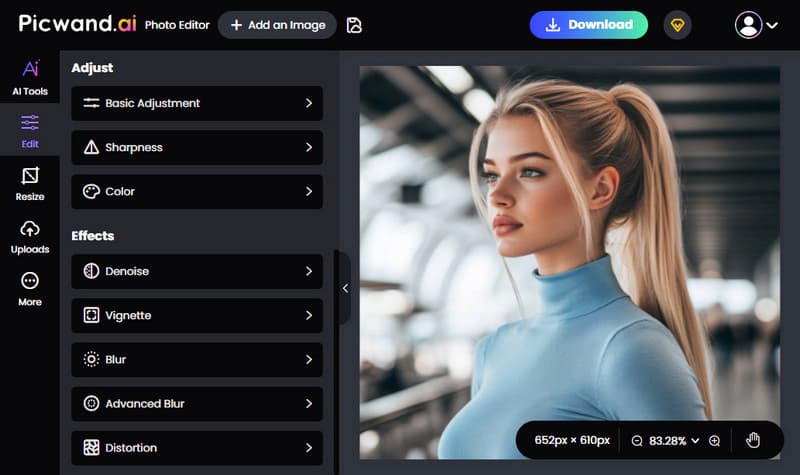
After comparing Nano Banana vs Seedream, it becomes clear that they still feel limited when it comes to true, detailed photo editing control. This is where it makes sense to look at more dedicated alternatives, and one solid option is the Picwand AI Photo Editor.
Picwand AI Photo Editor is built specifically for editing, combining basic tools with advanced AI-powered features. You can make essential adjustments like brightness, contrast, sharpness, and color control with greater precision. It also offers creative effects such as denoise, vignette, blur, advanced blur, and distortion. For composition work, it supports flexible cropping options, including freeform, 1:1, 3:2, 2:3, 4:3, 3:4, 16:9, and 9:16. It also includes lens correction tools, such as rotation and flipping, to fix perspective issues.
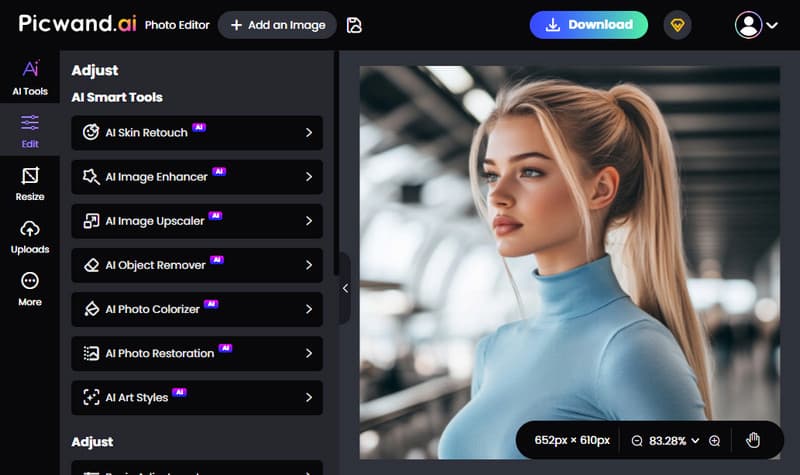
What makes it more powerful than AI generators is its AI smart features. It includes skin retouching, image enhancement, upscaling, object removal, photo colorization, photo restoration, and art style transformation. After editing and enhancing your images, you can export them in JPG, PNG, or WEBP formats with high-quality output, up to 4K.
Why Choose Picwand AI Photo Editor:
• Packed with essential photo adjustment tools and creative effects.
• Features over 10 smart AI features that go beyond standard editing.
• Supports export in JPG, PNG, and WebP formats with up to 4K quality.
• Includes flexible cropping options with aspect ratios such as 1:1, 3:2, 2:3, etc.
My Verdict:
Seedream 4.0 and Nano Banana are strong AI image generators, but both are limited in true editing control. For more precise adjustments, Picwand AI Photo Editor is a better alternative. It offers basic and AI tools, including retouching, upscaling, object removal, filters, cropping, and high-quality exports, for complete image editing.
Conclusion
When it comes to Nano Banana vs Seedream, both tools clearly stand out as powerful AI image generators with their own strengths. Nano Banana excels in realistic, consistent outputs, while Seedream offers more creative flexibility and high-resolution results. However, both still focus more on generation than on deep, precise image editing. If your workflow requires more control, refinement, and practical editing tools, it makes sense to go beyond just generators. For a more complete editing experience, try Picwand AI Photo Editor. It is a powerful alternative that combines basic adjustments, advanced AI tools, and professional-grade export options in one platform.