Basic PlanVIP PlanVIP ExpiredPurchased credits are valid for life but require an active VIP subscription to use
0Credit(s)
You can use credits to access all the AI tools on Picwand, such as the AI Image Upscaler, AI Age Filter, AI Video Enhancer, AI Video Upscaler, AI Video Effects, and more.
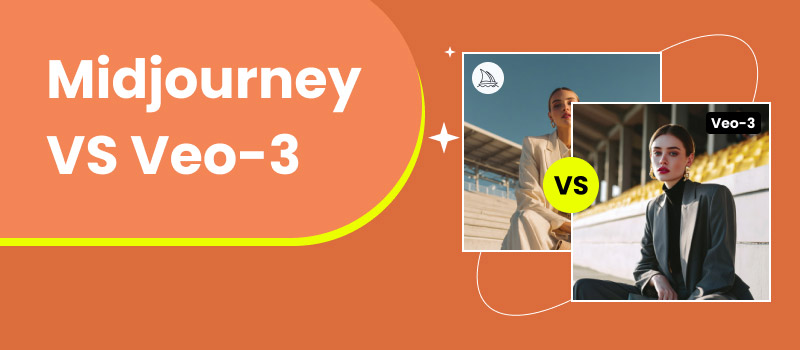
Generative AI is evolving at an unprecedented speed. What started with text-to-image models has now expanded into high-fidelity video generation, cinematic storytelling, and multimodal creative workflows. Among the most talked-about tools today are Midjourney, a veteran and leader in AI image generation, and Veo 3, Google’s latest push into AI-powered video creation. Although both are often mentioned under the same “AI creativity” umbrella, Midjourney vs Veo 3 are fundamentally different in design goals, output formats, and target users. One focuses on producing visually stunning still images, while the other aims to redefine how videos are generated using artificial intelligence.
This article provides a clear, side-by-side comparison of Midjourney vs Veo 3, breaking down how they work, what they cost, how they perform, and who should use them. We’ll also introduce Picwand, a practical bonus tool that helps bridge gaps for users who want fast, flexible AI image solutions without a steep learning curve.
Part 1. What is Veo 3 and Midjourney and How Do They Work
What Is Midjourney?
Midjourney is an AI-powered text-to-image generation platform best known for its artistic quality and stylized visuals. Launched in 2022, it quickly became a favorite among designers, illustrators, marketers, and digital artists.
Midjourney operates primarily through Discord, where users enter text prompts to generate images. The system interprets descriptive language, artistic references, lighting instructions, and composition cues to produce four image variations per prompt. Users can upscale, remix, or regenerate outputs for refinement.
At its core, Midjourney relies on large-scale diffusion models trained on vast datasets of images and artistic styles. Its strength lies not in realism alone, but in creative interpretation, often producing images that feel painterly, cinematic, or surreal.
How Midjourney works:
• User inputs a text prompt in Discord
• The AI processes semantic and stylistic cues
• Four draft images are generated
• Users upscale or refine selected results
What Is Veo 3?
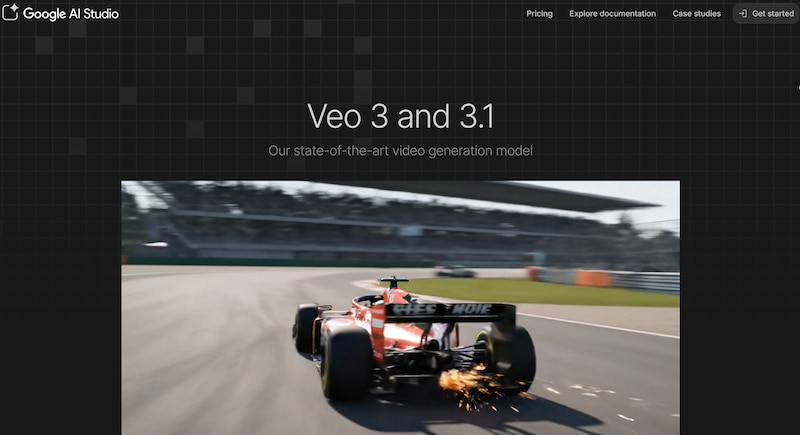
Veo 3 is Google DeepMind’s advanced text-to-video AI model, designed to generate high-quality, realistic video clips from textual descriptions. Unlike Midjourney, which focuses on static visuals, Google Veo 3 aims to simulate motion, camera movement, physics, and narrative continuity.
Veo 3 builds upon Google’s research in multimodal AI, combining natural language understanding with video synthesis. It can generate videos with consistent characters, scene transitions, and cinematic effects, making it suitable for storytelling, advertising concepts, and creative prototyping. Currently, Veo 3 is positioned as a high-end experimental tool, often accessed through limited programs or integrations rather than a fully open consumer product.
How Veo 3 works:
1. User provides a detailed text description
2. The model interprets motion, scene flow, and visual style
3. A short video clip is generated with temporal coherence
4. Outputs emphasize realism and narrative structure
Part 2. A Detailed Comparison Table Between Midjourney and Veo 3
Category
Midjourney
Veo 3
Core Output
Images (still visuals)
Videos (short cinematic clips)
Technical Approach
Diffusion-based image models
Multimodal text-to-video generation
Creative Philosophy
Artistic, stylized, interpretive
Realistic, cinematic, narrative-driven
Ease of Use
Moderate (Discord-based prompts)
Advanced (limited access, complex prompts)
Pricing
Subscription-based (monthly plans)
Not publicly priced yet
Output Quality
Exceptional image aesthetics
High realism and motion consistency
Speed
Fast image generation
Slower due to video complexity
Customization
Strong prompt control, remix options
High-level control, less granular editing
Best For
Artists, designers, marketers
Filmmakers, storytellers, video creators
Learning Curve
Medium
High
Creative Philosophy: Art vs Motion
Midjourney excels at visual imagination. It often produces images that go beyond literal descriptions, interpreting mood, atmosphere, and artistic style in ways that feel human and expressive, bringing high print quality.
Veo 3, on the other hand, prioritizes temporal realism. Its goal is not just to create a beautiful frame, but to ensure that multiple frames flow naturally as a video, with believable motion and camera behavior.
Performance and Output Consistency
When it comes to consistency, Midjourney is reliable for producing visually cohesive image sets, especially when using reference images or style parameters. However, it does not handle motion or sequence continuity.
Veo 3’s strength lies in maintaining consistency across frames, a notoriously difficult challenge in AI video generation. That said, video rendering requires more computing power and time, making it less accessible for casual users.
Pricing and Accessibility
Midjourney offers clear subscription tiers, making it relatively accessible for freelancers and small teams.
Veo 3 currently lacks transparent public pricing and is best viewed as an enterprise or research-level tool rather than a mass-market solution.
Part 3. Bonus: Picwand — A Practical Alternative for Everyday Creators
While Midjourney and Veo 3 represent two extremes of AI creativity, many users simply want fast, reliable, and easy-to-use AI image tools without complex workflows. This is where Picwand stands out.
Key Features of Picwand
• AI image generation and enhancement
• Photo restoration and upscaling
• Background removal and cleanup
• Beginner-friendly interface
• No Discord or technical setup required
Picwand is designed for practical use cases such as e-commerce visuals, social media graphics, blog illustrations, and quick creative tasks. It does not aim to replace high-end tools like Midjourney or Veo 3. Instead, it complements them by offering a lighter, faster alternative for everyday creative needs and automatic AI video skin retouching. For SEO editors, content marketers, and small businesses, Picwand provides strong value with minimal learning cost.
FAQs about Midjourney VS Veo 3
Is Midjourney better than Veo 3?
They serve different purposes. Midjourney is best for images, while Veo 3 focuses on video generation.
Is Veo 3 available to the public?
Access is limited, and it is not yet fully open to general users.
Which tool is better for beginners?
Picwand is the most beginner-friendly, followed by Midjourney. Veo 3 requires advanced knowledge.
Conclusion
The comparison between Midjourney vs Veo 3 is not about which tool is universally better, but about choosing the right tool for the right creative goal. Midjourney remains unmatched in artistic image generation, while Veo 3 represents the future of AI-driven video storytelling.
For users who want a balance between power and simplicity, Picwand offers a compelling alternative that fits seamlessly into everyday workflows. Whether you are an artist, marketer, or content creator, understanding these differences will help you invest your time and resources more wisely in the fast-moving world of AI creativity.