Basic PlanVIP PlanVIP ExpiredPurchased credits are valid for life but require an active VIP subscription to use
0Credit(s)
You can use credits to access all the AI tools on Picwand, such as the AI Image Upscaler, AI Age Filter, AI Video Enhancer, AI Video Upscaler, AI Video Effects, and more.
AI video generation has entered a new phase. Instead of simple animations or template-driven clips, today’s tools aim to create cinematic scenes, realistic motion, and narrative storytelling directly from text prompts. Among the most talked-about platforms are OpenAI’s Sora and Kuaishou Technology’s Kling. Both tools promise next-generation AI video, but they take very different approaches to accessibility, realism, and creator control. This contrast guide explains the real differences between Sora vs Kling without hype. We’ll examine output quality, prompt interpretation, speed, pricing, and ideal use cases. Whether you’re a marketer, filmmaker, social media creator, or AI enthusiast, the goal is simple: help you choose the right tool for your workflow. We’ll also introduce a practical alternative for users who want efficiency and affordability without sacrificing visual quality.
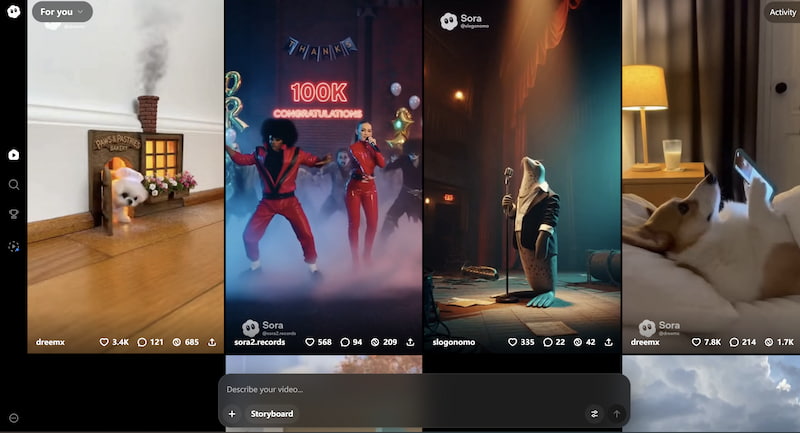
Sora is designed as a cinematic AI video engine. Its focus is realism — physics-aware motion, camera simulation, lighting behavior, and spatial consistency. The platform is built to transform descriptive text prompts into short film-like sequences.
What sets Sora apart is its ambition. It isn’t trying to imitate social media filters. Instead, it aims to simulate real-world scenes: city streets, natural environments, human gestures, and complex camera paths. The result often looks closer to previsualization for film production than standard AI animation.
Core characteristics:
• Film-style realism
• Advanced scene simulation
• Strong narrative interpretation
• Experimental creative freedom
• Premium positioning
Sora appeals to creators who want to push visual storytelling boundaries. It’s less about speed and more about visual ambition.
Kling Overview
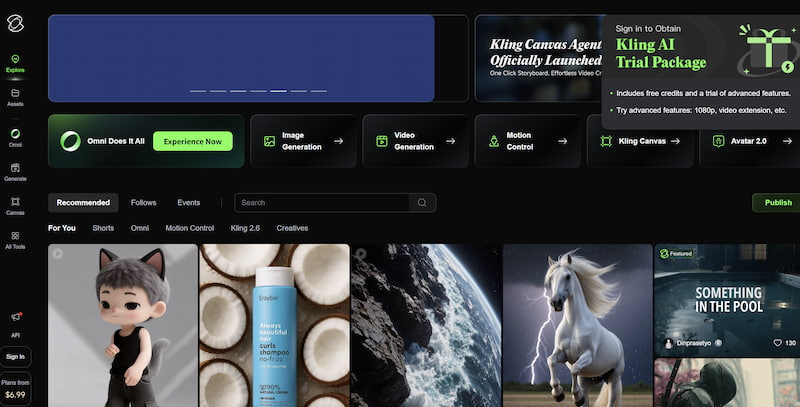
Kling takes a different path. It emphasizes accessibility and fast generation while still aiming for high-quality visuals. The platform is optimized for consumer creators and social video production, making it easier to produce longer clips and repeatable styles.
While Kling also supports cinematic prompts, its design philosophy is more practical. It prioritizes stable output, predictable results, and broader access. Users can iterate quickly and generate content suitable for online platforms without heavy technical knowledge.
Core characteristics:
• Faster generation cycles
• More accessible entry
• Longer output support
• Creator-friendly workflow
• Social media orientation
Kling is built for scale and usability. It serves creators who need consistent video production rather than experimental artistry.
Part 2. Key Features Comparison
Below is a structured comparison of the most important dimensions between Sora AI vs Kling AI.
Feature
Sora
Kling
Video Quality & Output Length
Ultra-realistic short clips
High-quality longer clips
Prompt Understanding & Creative Control
Deep cinematic interpretation
Guided, stable prompt results
Editing & Generation Speed
Slower, experimental
Faster iteration workflow
Accessibility & Pricing
Limited premium access
Broader consumer availability
Use Cases & Target Audience
Film-style storytelling
Social and marketing content
Strengths & Weaknesses
Extreme realism, limited access
Practical speed, less cinematic depth
Video Quality & Output Length
Sora’s greatest strength is visual realism. Motion blur, lighting transitions, and environmental detail often resemble live-action footage. However, clips tend to be shorter due to computational complexity.
Kling produces slightly less cinematic output but supports longer durations and repeatable formats. For social creators who need 10–30 second clips consistently, Kling’s length advantage matters. You can use it by referring to best Kling AI prompts.
Sora vs Kling: Sora wins on realism. Kling wins on duration and stability.
Prompt Understanding & Creative Control
Sora interprets complex prompts with cinematic awareness. You can describe camera angles, emotional tone, weather, and physical movement in detail. It behaves like a visual storyteller.
Kling uses a more structured system. It’s easier for beginners and produces reliable results, but it may not match Sora’s interpretive depth.
Kling vs Sora: Kling favors predictability. Sora favors advanced creative control.
Editing & Generation Speed
Sora prioritizes quality over speed. Generation can take longer, and iteration requires patience. It’s suited for deliberate creative sessions by referring to Sora AI video prompt best practices.
Kling is optimized for rapid production. You can test multiple variations quickly, making it ideal for marketing workflows and social campaigns.
Kling is better for high-volume production.
Accessibility & Pricing
Sora operates in a more restricted environment with premium positioning. Access may be limited, and pricing reflects experimental technology.
Kling targets a broader audience with consumer-friendly entry points. It’s easier for everyday creators to adopt.
Kling AI vs Sora: Kling is more accessible. Sora is positioned as a cutting-edge premium tool.
Use Cases & Target Audience
Sora is ideal for:
• Filmmakers
• Creative directors
• Concept artists
• Experimental storytellers
• Visual researchers
Kling is ideal for:
• Social media creators
• Influencers
• Marketing teams
• Agencies
• Small businesses
Each tool serves a different ecosystem.
Strengths & Weaknesses
Sora strengths:
• Cinematic realism
• Advanced prompt interpretation
• Film-style motion
Sora weaknesses:
• Limited availability
• Short clip constraints
• Slower iteration
Kling strengths:
• Fast generation
• Longer output
• Accessible workflow
Kling weaknesses:
• Less cinematic depth
• Recognizable AI style
Neither platform replaces the other. They represent different priorities.
Part 3. Best Alternative AI — Picwand AI
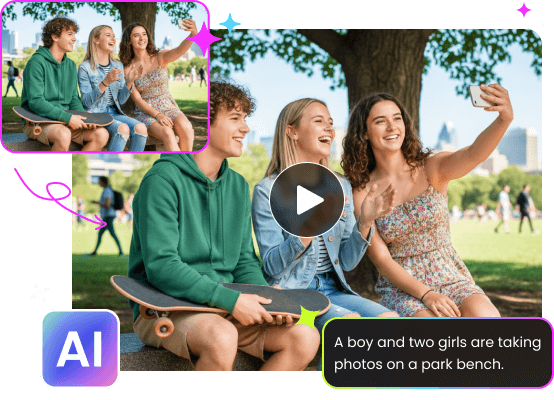
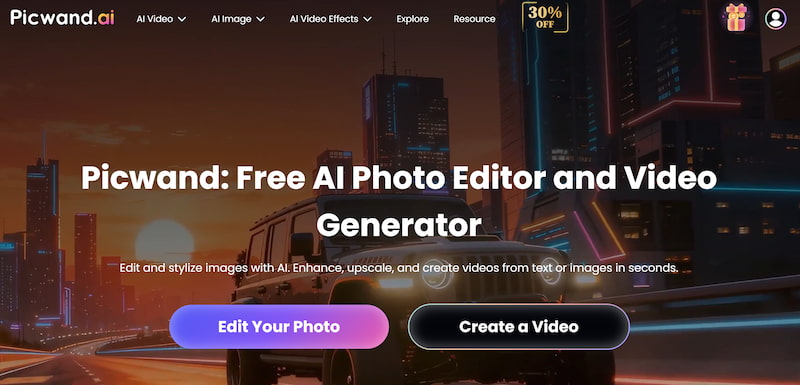
For users who want a balance of power, simplicity, and affordability, Picwand AI Text-to-Video Generator offers a strong alternative. Picwand focuses on practical video generation. Instead of targeting experimental cinema or mass social automation, it emphasizes clean visuals, efficient workflow, and beginner-friendly controls.
Why Picwand AI stands out:
• Simple interface for fast onboarding
• Consistent output quality
• Built-in enhancement tools
• Affordable pricing structure
• Optimized for marketing workflows
• Minimal learning curve
Picwand is designed for users who want results immediately. It removes the complexity barrier while still producing professional-looking content suitable for ads, social media, tutorials, and presentations. For many businesses and creators, speed and reliability matter more than cinematic experimentation. In everyday production scenarios, Picwand can outperform both Sora and Kling in efficiency.
Part 4. FAQs about Sora VS Kling
Is Sora more advanced than Kling?
Yes in cinematic realism, but not necessarily in workflow efficiency. Kling is more practical for frequent production.
Which tool is better for social media content?
Kling is generally better suited for social platforms due to speed and longer output support.
Is Picwand suitable for business marketing?
Yes. Picwand is optimized for marketing teams that need fast, clean, repeatable video output.
Conclusion
Sora vs Kling represent two different visions of AI video. Sora pushes cinematic boundaries. It’s a glimpse of AI as a filmmaking collaborator, capable of stunning realism and artistic interpretation. But it demands patience and access. Kling is a production tool. It emphasizes speed, stability, and creator accessibility. It’s designed for scale, not experimentation.
The smartest choice depends on your priorities. If your goal is consistent, efficient, and affordable video output without a steep learning curve, Picwand offers the most balanced solution. AI video tools will keep evolving. The advantage belongs to creators who choose platforms that match their workflow — not just the ones with the most hype.